Source Soft Close Hinge for Kitchen, Bathroom, and Wardrobe
Compare 30 soft close hinge options from verified Chinese manufacturers. These hinges feature iron or steel construction, varying overlay types, and durability tested up to 50,000 cycles for reliable cabinet and drawer performance.
Key considerations
Products List


$0.11 - $0.11
Moq: 10000


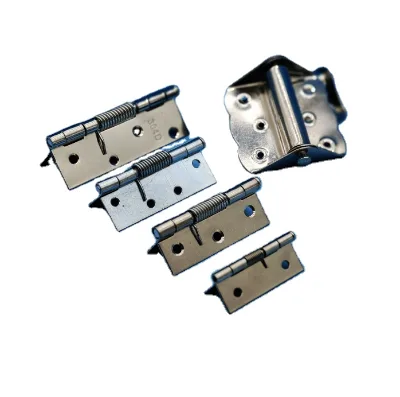
Comprehensive Sourcing Guide
Strategic Sourcing Guide for Soft Close Hinge Procurement
Understanding Technical Specifications and Functional Variations
When sourcing soft close hinges, buyers must first navigate a complex landscape of technical specifications that define the product's functionality and compatibility. The core keyword "soft close hinge" implies a mechanism designed to dampen the closing motion of cabinet doors, preventing slamming and reducing wear on cabinetry. However, the market presents diverse configurations that require precise identification before procurement. Based on observed product attributes, the primary functional distinction lies in the mounting style and overlay type. Suppliers offer hinges categorized by "Inset," "Half Overlay," and "Full Overlay" applications. The specific crank height parameters observed include Inset (C=19), Half Overlay (C=8), and Full Overlay (C=0), which are critical for ensuring the hinge aligns correctly with the cabinet door's position relative to the frame.
Material composition is another pivotal technical factor. The supply chain data indicates the use of both "Iron" and "Steel," with specific references to "Cold-Rolled Steel" for certain models. The thickness of the hinge components varies significantly, with general specifications noting a thickness of 2.5mm for the main body, while the hinge cup, arm, and plate dimensions are detailed as 1.0mm, 1.2mm, and 1.2mm respectively. These dimensional variances directly impact the structural integrity and load-bearing capacity of the hinge. Furthermore, the opening angle is a critical performance metric, with observed ranges spanning from 90 to 105 degrees, and specific instances noting 95-100 degrees. Buyers must verify that the selected hinge matches the intended cabinet design, as a mismatch in opening angle can lead to interference with adjacent doors or drawers.
The mounting hardware also presents specific variations. Some models are described as "Fixed," while others are "Unfixed," indicating different installation methodologies. The plate geometry is equally diverse, with options including "Square 3D" or "Square Plate" configurations. For glass applications, the specifications shift entirely, with products designed to suit 10-12mm glass thicknesses, utilizing a "Glass Clamp" type mechanism. The standard hole dimensions observed include 486mm and 459.5mm, which are essential for drilling compatibility. Additionally, the "Soft Close" feature is explicitly listed as a key attribute for models such as HT-02.098A and HT-02.B001, distinguishing them from standard mechanical hinges.
Compliance, Certification, and Quality Verification Standards
In the B2B procurement of hardware components, verifying compliance and certification is not merely a formality but a risk mitigation strategy. The observed product data highlights several certification bodies and standards that buyers should prioritize during the supplier evaluation process. The most frequently cited certification is ISO9001, which indicates a supplier's adherence to quality management systems. Other observed certifications include ISO and CE, which are crucial for market access in various regions, particularly Europe. The presence of an "SGS" test attribute suggests that third-party verification of product performance is available for certain models, adding a layer of credibility to the supplier's claims.
Buyers must exercise caution when interpreting these certifications. While the data lists these standards, it does not guarantee that every listed product in a supplier's catalog holds active, valid certification. The procurement process should involve requesting current, verifiable certificates for the specific batch or model being ordered. The "Open-Close Durability Test" is a specific performance metric observed in the data, with a value of 50,000 times. This figure represents a significant benchmark for longevity, suggesting that the hinge mechanism is engineered to withstand extensive use without failure. However, buyers should verify if this test result applies to the specific model in question or if it is a general claim for the product line.
Standardization is another area requiring careful attention. The data references specific product standards such as "hole: 486mm; 459.5mm" and "48mm*28mm." These dimensions are not universal; they represent specific design parameters that must be matched to the buyer's existing cabinetry infrastructure. Relying on a supplier's general claim of compliance without verifying the specific standard code for the ordered item can lead to installation failures. The "Soft Close Glass Door Hinge" standard is also noted, indicating a specialized category that may have different testing requirements compared to standard cabinet hinges.
Cost Drivers and Pricing Dynamics in the Market
The pricing structure for soft close hinges is influenced by a combination of material costs, manufacturing complexity, and order volume. The observed price range in the market spans from $0.01 to $30 USD, a wide variance that reflects the diversity of product types and quality levels. At the lower end of this spectrum, basic hinges made from standard iron or steel with minimal features may be priced affordably. Conversely, the upper end likely encompasses specialized models with advanced 3D adjustment capabilities, premium materials like cold-rolled steel, or those with rigorous third-party testing like SGS.
Minimum Order Quantity (MOQ) is a significant driver of the effective unit cost. The observed MOQ range is extensive, spanning from 2 to 20,000 units. For small-scale projects or prototyping, suppliers with low MOQs (e.g., 2 units) allow for flexibility but often come with a higher per-unit price. Large-scale procurement, targeting the upper end of the MOQ range, typically unlocks volume discounts, significantly reducing the cost per unit. Buyers must balance their immediate inventory needs with long-term storage costs. The packaging details also play a role in logistics costs; options range from "Bag Pack" for small quantities to "2 PCS: Plastic Bag, 200 PCS: Carton" or "100PCS/CTN" for bulk shipping. Efficient packaging optimization can reduce freight expenses, especially when shipping from major manufacturing hubs like Guangdong, China.
Material selection is a primary cost determinant. The shift from standard iron to cold-rolled steel or the inclusion of complex damping mechanisms for the soft-close feature will inherently increase the manufacturing cost. Additionally, the complexity of the hinge design, such as the inclusion of 3D adjustment plates or specific overlay configurations, adds to the production time and material waste, influencing the final price. Buyers should request detailed cost breakdowns to understand the value proposition of a higher-priced item, ensuring that the premium is justified by superior durability, material quality, or extended warranty terms.
Typical Applications and Installation Contexts
The versatility of soft close hinges allows them to be deployed across a wide array of residential and commercial environments. The observed application data explicitly lists "Kitchen, Bathroom, Home Office, Living Room," as well as "Cabinet, Drawer, Wardrobe, etc." This broad applicability underscores the importance of selecting the correct hinge variant for the specific environment. In kitchens and bathrooms, where humidity and temperature fluctuations are common, the material choice becomes critical. Hinges made from cold-rolled steel or treated iron may offer better corrosion resistance compared to untreated steel, making them more suitable for high-moisture areas.
The installation context is equally vital. The distinction between "Inset," "Half Overlay," and "Full Overlay" dictates the visual and functional outcome of the cabinetry. Inset hinges are used when the door sits flush within the cabinet frame, requiring precise alignment and specific crank heights (C=19). Half-overlay and full-overlay hinges are designed for doors that sit partially or fully outside the frame, respectively. The "Square 3D" or "Square Plate" configurations offer additional adjustability, allowing installers to fine-tune the door's position in three dimensions (up/down, left/right, in/out) after installation. This feature is particularly valuable in large-scale projects where minor discrepancies in cabinet construction can occur.
For glass applications, the requirements shift significantly. The "Glass Clamp" type hinge, designed to suit 10-12mm glass, is essential for modern, minimalist designs where traditional wooden doors are replaced with glass panels. These hinges often require different mounting hardware and may have different load-bearing limits compared to standard cabinet hinges. The "Unfixed" attribute observed in some models suggests a design that allows for easier removal or adjustment, which can be beneficial for maintenance or reconfiguration of the space. Buyers must ensure that the selected hinge not only fits the aesthetic requirements but also meets the structural demands of the specific application, whether it is a heavy wardrobe door or a lightweight glass cabinet.
Supplier Evaluation and Geographic Considerations
Evaluating suppliers for soft close hinges requires a multi-faceted approach that considers geographic origin, production capacity, and logistical reliability. The observed product data indicates that the majority of suppliers are located in China, with specific mentions of "Guangdong, China (Mainland)," "Dongying, Shandong," and general "China" origins. Guangdong is a well-known manufacturing hub for hardware and furniture components, offering a dense ecosystem of suppliers, specialized labor, and efficient supply chains. This concentration often leads to competitive pricing and rapid production cycles. However, buyers should also consider the potential variability in quality control across different regions within China.
When evaluating a supplier, buyers should look beyond the location and focus on the depth of their product portfolio. A supplier offering a wide range of models, from basic hinges to specialized glass clamps, demonstrates versatility and technical capability. The presence of specific model numbers like "BG19," "DY04H-3D," and "HT-02.098A" suggests a mature product line with established designs. Buyers should verify the supplier's ability to provide consistent quality across these different models. The "Customization" attribute being available is a significant advantage, allowing buyers to tailor products to specific project requirements, such as unique hole patterns or custom packaging.
Logistics and lead times are critical factors in the evaluation process. While specific lead times are not provided in the data, the variety in packaging details (e.g., "Single Box -Carton-Pallet-Container") suggests that suppliers are equipped to handle various shipping scales. Buyers should inquire about the supplier's ability to meet tight deadlines and their experience with international shipping, particularly for large orders involving palletized containers. The "100 PCS/Box" or "200 PCS: Carton" packaging options indicate a readiness for bulk distribution, which is essential for large-scale procurement projects.
Quality Control and Long-Term Procurement Strategies
Ensuring the long-term reliability of soft close hinges requires a robust quality control (QC) strategy that extends beyond the initial purchase. The observed "Open-Close Durability Test" of 50,000 times serves as a benchmark for expected performance, but buyers should implement their own QC protocols to verify this claim. This may involve requesting sample testing reports from the supplier or conducting in-house tests on received batches. The "SGS" test attribute indicates that third-party verification is possible, and buyers should prioritize suppliers who can provide such documentation for every shipment.
Packaging integrity is another aspect of quality control that impacts long-term procurement success. The data shows various packaging methods, from simple "Bag Pack" to more robust "Standard Carton" and "100PCS/CTN" configurations. Proper packaging protects the hinges from damage during transit, which is crucial for maintaining the precision of the soft-close mechanism. Buyers should specify packaging requirements in their purchase orders to ensure that the products arrive in optimal condition. The "Customized" packaging option mentioned in the data allows for further tailoring to specific logistics needs, reducing the risk of damage and facilitating easier inventory management.
Long-term procurement strategies should also focus on building a sustainable relationship with suppliers. The availability of "Customization" and the wide range of models suggest that suppliers are capable of adapting to changing market demands. Buyers should aim to establish a partnership that allows for continuous improvement in product quality and supply chain efficiency. Regular communication regarding performance feedback, such as any issues with the soft-close mechanism or durability, can help suppliers refine their products. Additionally, maintaining a diverse supplier base can mitigate risks associated with supply chain disruptions, ensuring a steady flow of high-quality hinges for ongoing projects. By prioritizing these strategic elements, buyers can secure a reliable supply of soft close hinges that meet their technical, financial, and operational requirements.
FAQs
What certifications do soft close hinges typically hold?
Many soft close hinges hold ISO9001, ISO, and CE certifications. Some models also undergo SGS testing to verify performance standards. Buyers should request current certificates for specific batches to ensure compliance before procurement.
Which overlay types are available for cabinet door hinges?
Hinges are available in Inset, Half Overlay, and Full Overlay configurations. Specific crank heights include C=19 for Inset, C=8 for Half Overlay, and C=0 for Full Overlay. Selecting the correct type ensures proper door alignment.
How durable are soft close hinges under repeated use?
Observed durability tests indicate an open-close lifespan of 50,000 times. This benchmark suggests the mechanism withstands extensive use without failure. Verify if this test result applies to the specific model before ordering.
Can I customize the hole dimensions for these hinges?
Customization is available for specific hole dimensions like 48*6mm or 45*9.5mm. Suppliers also offer options for Square 3D or Square Plate configurations. Confirm custom requirements with the manufacturer to ensure compatibility.
What materials are used to manufacture these hinges?
Hinges are commonly made from Iron, Steel, or Cold-Rolled Steel. Component thickness varies, with main bodies at 2.5mm and plates at 1.0mm or 1.2mm. Material choice impacts structural integrity and corrosion resistance.
Where are the primary manufacturing locations for these products?
Most products originate from China, specifically Guangdong and Dongying, Shandong. Guangdong is a known hub for hardware manufacturing with efficient supply chains. Verify specific factory locations to assess logistics and lead times.
What is the typical minimum order quantity for these hinges?
Minimum order quantities range from 2 units up to 20,000 units depending on the supplier. Lower MOQs suit small projects while higher volumes unlock better pricing. Check specific supplier terms for your required quantity.